
❋
From Microbial Inoculant to Living System
Our Work
From Microbial Inoculant to Living System
What happens after we add compost, biochar, or a microbial preparation to soil? What changes can we observe—and what would demonstrate a lasting benefit?
At Poo-Ra Vida, these questions guide hands-on exploration in Pérez Zeledón, Costa Rica. We combine soil microscopy, basic chemical measurements, and field observations to follow changes over time.
❋ Coffee Soil Trial Following changes in a Costa Rican coffee farm’s soil across eight treatment groups using compost, biochar, experimental BioPods™, and an untreated control.
❋ Soil Under the MicroscopeExploring soil, compost, and microbial preparations through microscopy. Documenting what we observe, comparing samples, and asking new questions about the living world beneath our feet.
❋ Compost, Biochar & BioPods™Turning locally available materials into opportunities for practical soil exploration. Our small trials investigate how these amendments behave and how soil responds over time.
❋ Tools for Curious GrowersMeet “Reap What You Know” and “The Plot Thickens”. Tools for recording farm practices, soil measurements, microscopy images, and observations so we can follow changes and learn as we grow.
Following Change in Coffee Soil
What happens when compost, biochar, and a microbial preparation are introduced into an established coffee-growing system?
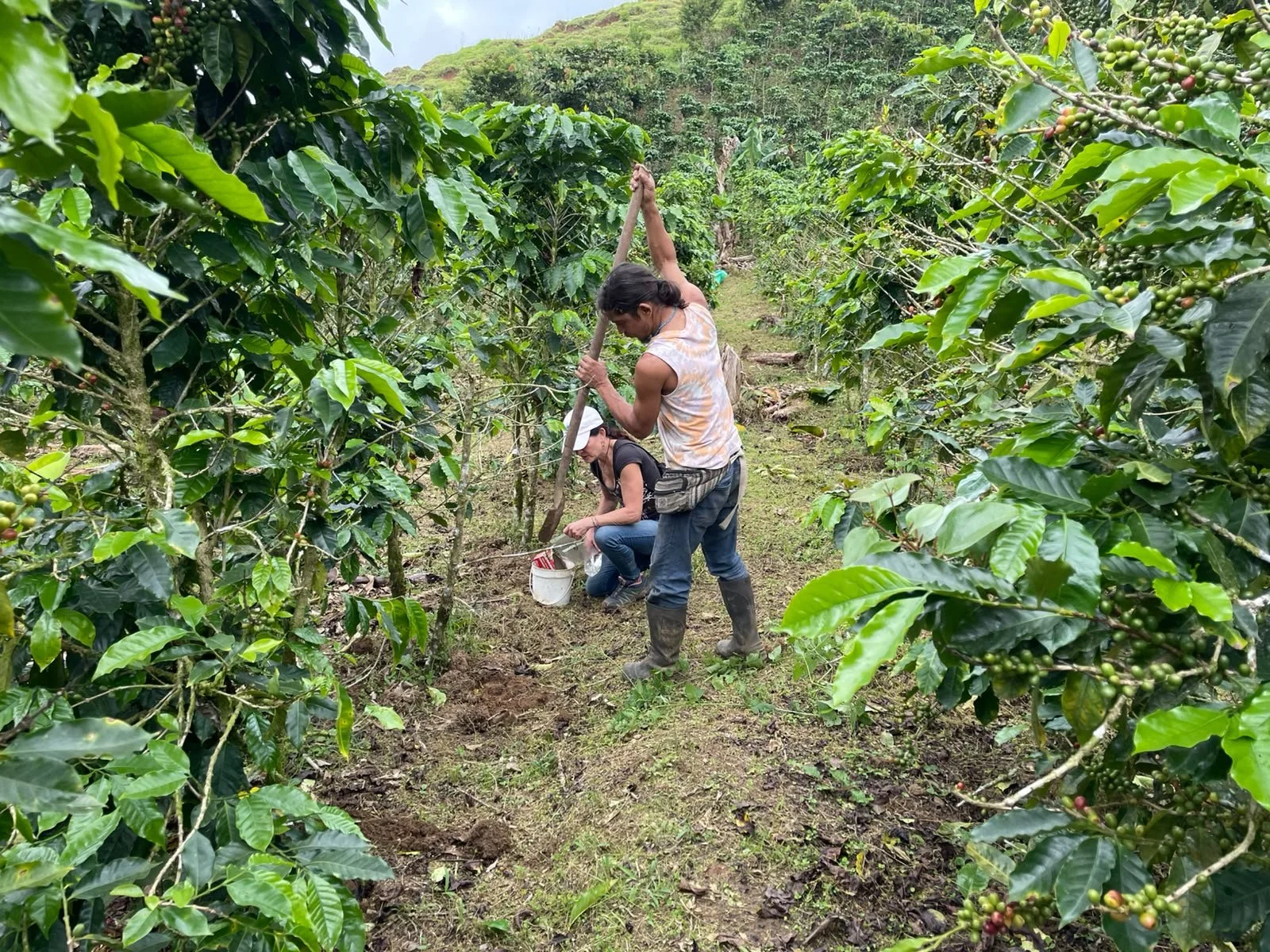
At a neighboring coffee farm in Pérez Zeledón, Costa Rica, Poo-Ra Vida is conducting an exploratory trial involving 40 coffee trees across eight treatment groups. These include compost, biochar, experimental BioPods™, combinations of these amendments, and an untreated control.
We follow soil changes over time using pH measurements, electrical conductivity—a measure related to dissolved salts—and microscopy. At each sampling, soil from five trees is combined into one representative sample for each treatment group.
Early observations show different chemical patterns among treatments, alongside repeated observations of larger biological forms in several amended soils. Some changes have been temporary, reinforcing the importance of following the soil over time rather than relying on a single reading or image.
These observations help guide our next questions. They do not yet demonstrate that the amendments improve soil function, coffee yield, or crop quality. Our aim is to build a careful record connecting what we apply, what we observe, and what we can reasonably conclude.
This trial forms part of Laura Flanagan’s presentation, “From Microbial Inoculant to Living System,” at BioAgTech World Congress in Anaheim, November 2026.
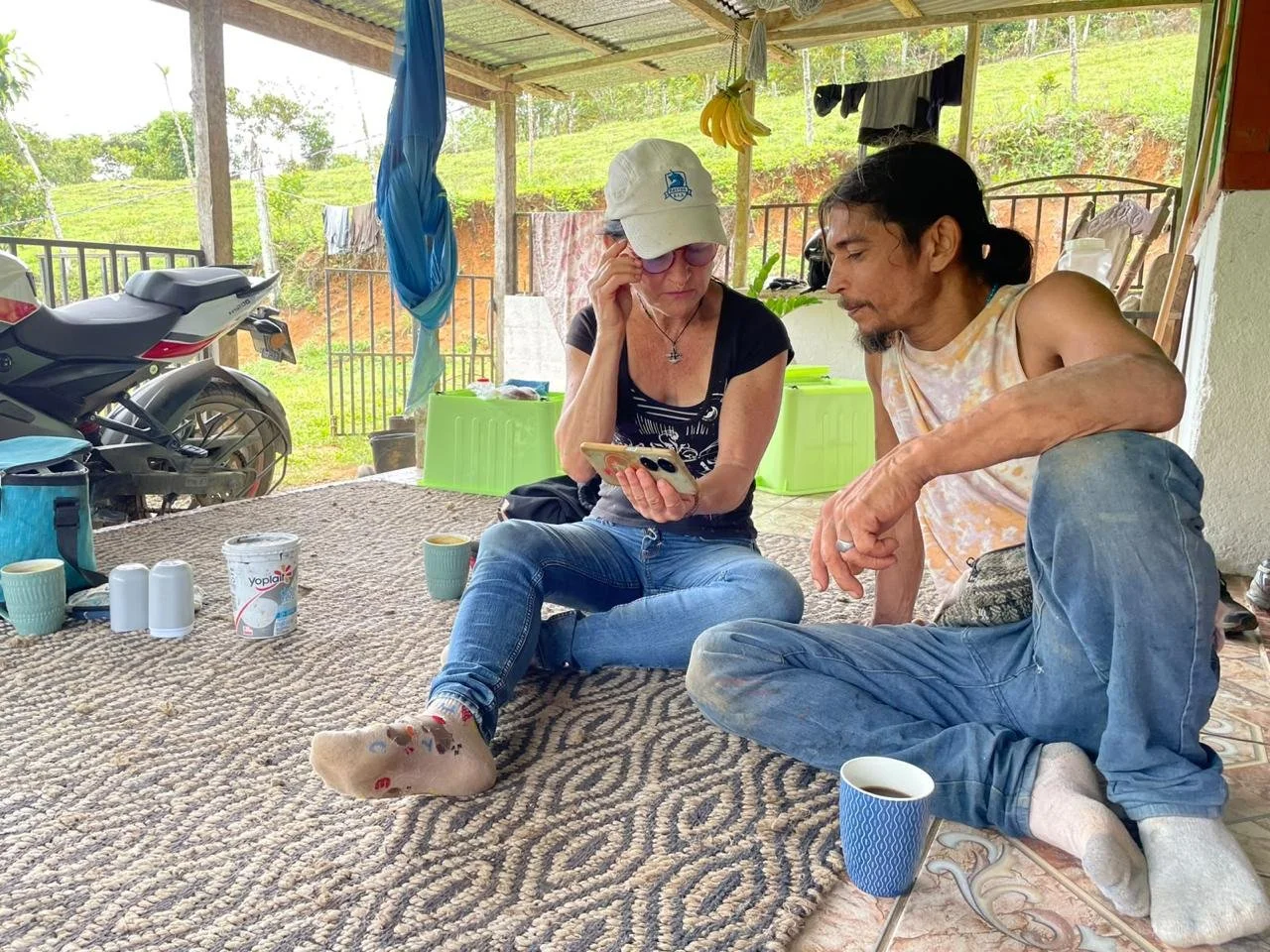
From the field: collecting soil samples during the first week of our coffee-soil trial in Pérez Zeledón, Costa Rica..
I’m Laura Flanagan, a molecular biologist whose curiosity has taken me from the laboratory to the living soils of Costa Rica.
Through Poo-Ra Vida, I bring nearly 30 years of scientific experience to hands-on exploration with compost, biochar, and soil microscopy. Here in Pérez Zeledón, my farm and neighboring farms offer opportunities to ask questions, follow changes, and learn alongside fellow growers.
I’m drawn to the connections between soil, plants, animals, and people—and to sharing the discoveries and unanswered questions along the way.